
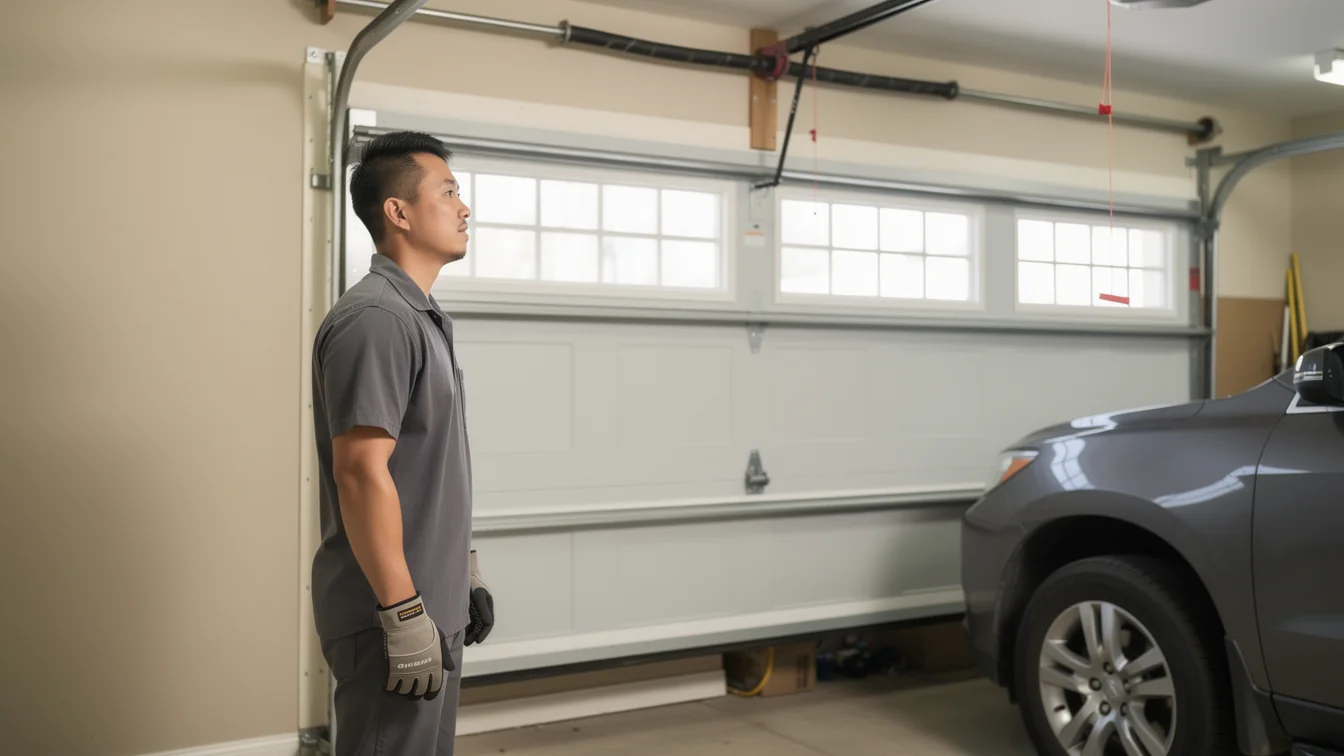
What That Sound Is Actually Telling You
What a grinding, popping, or slamming garage door means in El Dorado Hills homes built mostly between 1959 and 2004, and when to stop troubleshooting and call someone.
Read moreBlogEl Dorado Hills, CA · 4 min read
El Dorado Hills homes built 1959-2004 have track hardware that ages differently than coastal stock. Here's what actually knocks a door off its rails here.
Local detail
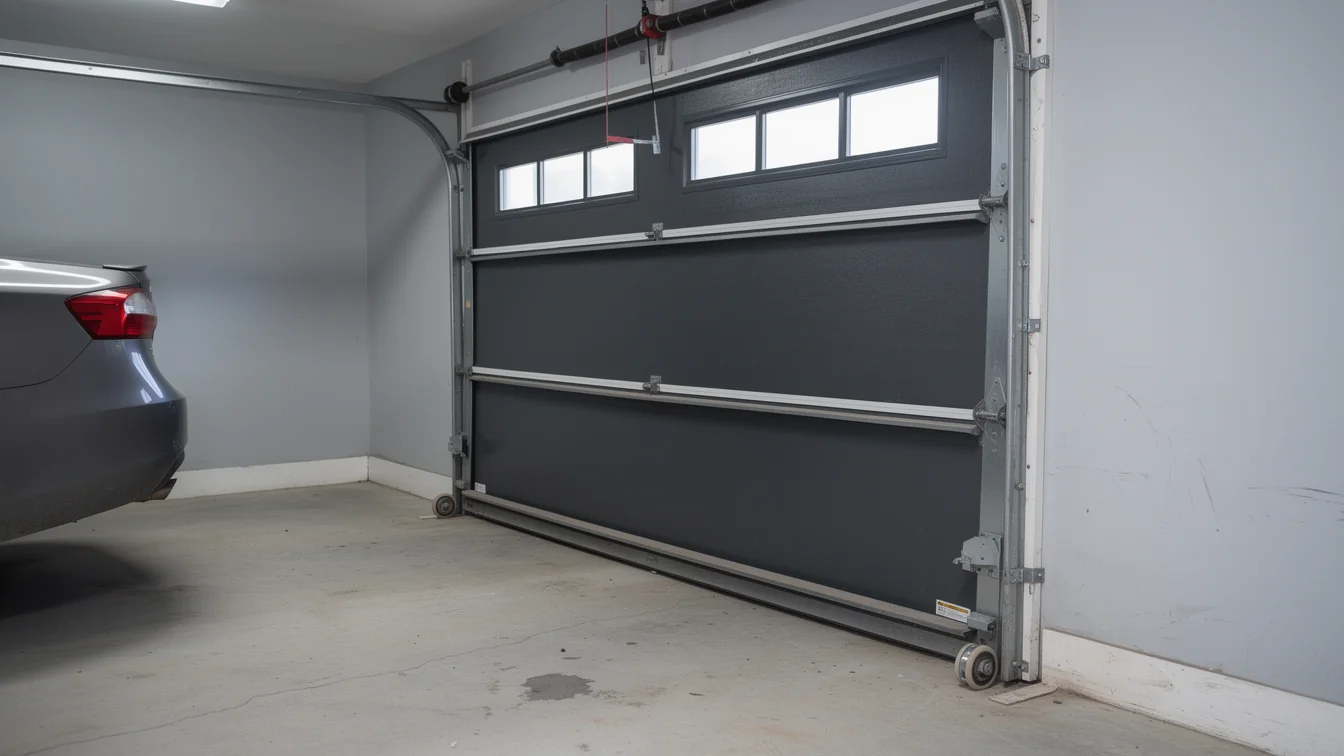
A door that's hopped its track on one side can sometimes be nudged back on by loosening the track bracket, squaring the door, and retightening - if the track itself is straight and the rollers are intact. That's the limit of what a homeowner should try. If a cable has jumped the drum, if a roller has snapped off its stem, or if the track is bent rather than just loose, you're into a repair that needs the door lifted off spring tension safely, and that's not a one-person, no-tools job. Most houses in this area went up between 1959 and 2004, with a lot of that stock dating to the 1980s and 90s, so a good share of doors we get called on are original builder-grade track and hardware that's simply fatigued past the point of a quick fix. Pushing on a track that's already bowed usually bends it further and turns a $150 bracket job into a full track replacement. If you've already tried to force the door back on and it's binding harder than before, stop there and call - you've likely stressed the track past straight.
The area
The climate here sits in the moderate-heat band, not the extreme swings you'd get somewhere with hard freeze-thaw cycles. That matters for tracks in a specific way: the metal doesn't contract and expand violently season to season, so you don't get the warped-track failures common in colder climates. What you do get is steady heat cycling on the garage interior, especially on doors facing full sun through the afternoon, which dries out old track lubricant and stiffens roller bearings over years. On a house from the early 1980s stock common across this area, that's three-plus decades of thermal cycling on hardware that was never upgraded. The bracket bolts work loose a fraction at a time, the track rail drifts a few degrees out of plumb, and the door starts riding slightly off-center - not enough to notice until a roller finally pops the rail edge.
What we find
Most off-track calls we see aren't a single dramatic event. They're the end result of track brackets that have been quietly loosening against lumber or masonry for years, paired with rollers that were never replaced since the house was built. Houses here built in the 1980s and 90s often still have their original galvanized rollers and steel track - serviceable hardware, but it wears unevenly. One side of the door usually sags a little lower than the other after enough years, and that uneven pull is what walks a roller off the rail, usually at the curve where the track turns from vertical to horizontal. A bent track almost never straightens back to true; bending it back is a temporary patch, not a fix. If the track is kinked at the curve, replacing that section is the honest answer, and we'll say so rather than hammer it straight and send you off with a door that'll pop again in a month.
How we work
Before you call, you can tell us a lot by looking at three things. First, stand back and see if the door is sitting level in the opening or tilted - a tilt usually means a spring or cable issue, not just a track problem. Second, run a hand along the vertical track on each side and feel for bolts that wiggle against the wall framing; loose brackets are common on houses from the 1980s stock where the original lag screws have backed out over the years. Third, look at the curved section of track where it bends toward horizontal - a kink or flat spot there is usually where a roller jumped. Don't try to force the door up or down past where it's sticking. We don't do emergency after-hours dispatch, so if it's off track at night and the car's already out, it can usually wait till morning without getting worse.
Questions
Only if the track is straight and the roller is still seated on its stem - loosen the bracket, square the panel, retighten. If the track is bent or a roller's broken off, pushing it just bends the rail further. When in doubt, leave it and call.
If the door looks tilted or one side hangs lower, that's usually a spring or cable issue, not the track. A true off-track door rides level but has visibly hopped the rail at a roller or the curved section - check both before assuming either.
A lot of the housing stock here dates to the 1980s and 90s, and much of that still runs original track and rollers. Decades of bracket bolts loosening and bearings drying out eventually let the door drift just enough to pop a roller off the rail.
We don't run after-hours emergency dispatch. If a door comes off track overnight and isn't blocking a car you need, it's usually safe to leave until regular hours rather than force it.
Recommendation
More garage door guides for El Dorado Hills homeowners.
What a grinding, popping, or slamming garage door means in El Dorado Hills homes built mostly between 1959 and 2004, and when to stop troubleshooting and call someone.
Read more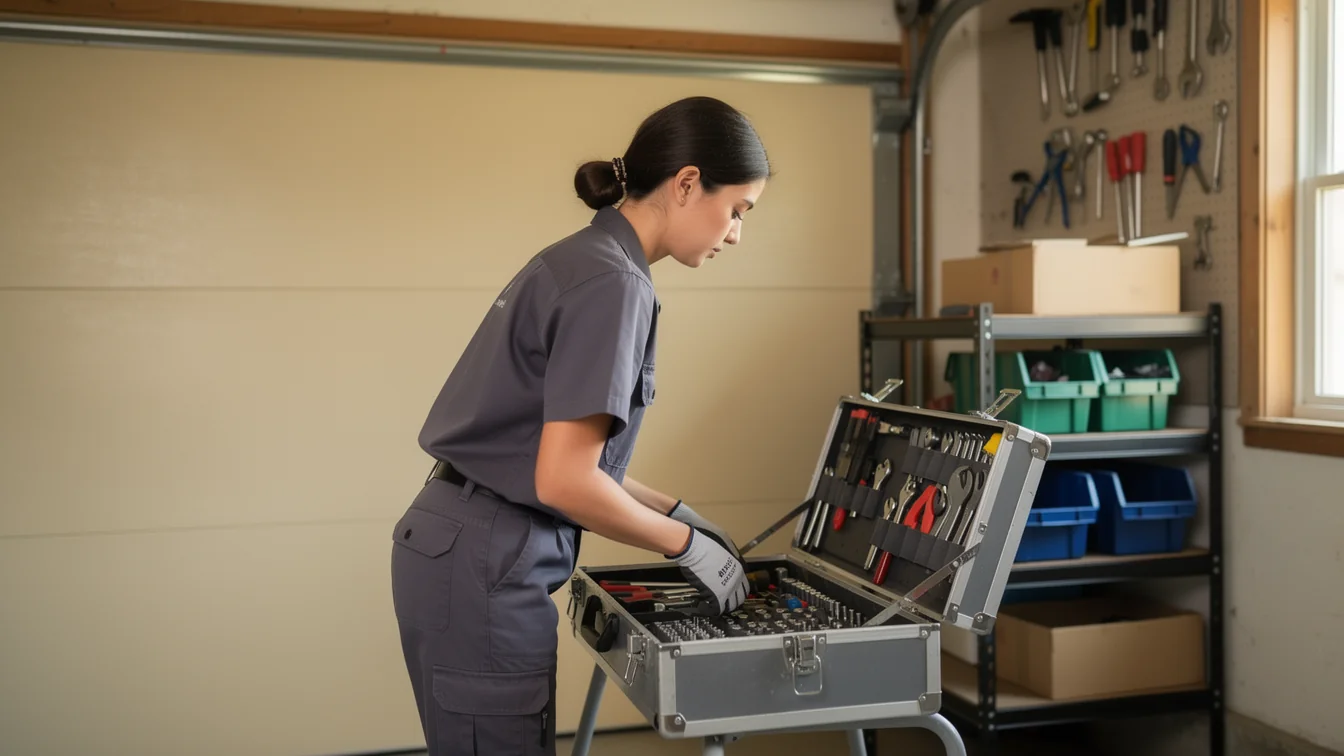
A breakdown of what a garage door service call actually involves in El Dorado Hills, from spring and track checks to the age-specific issues common in 1960s-2000s builds here.
Read more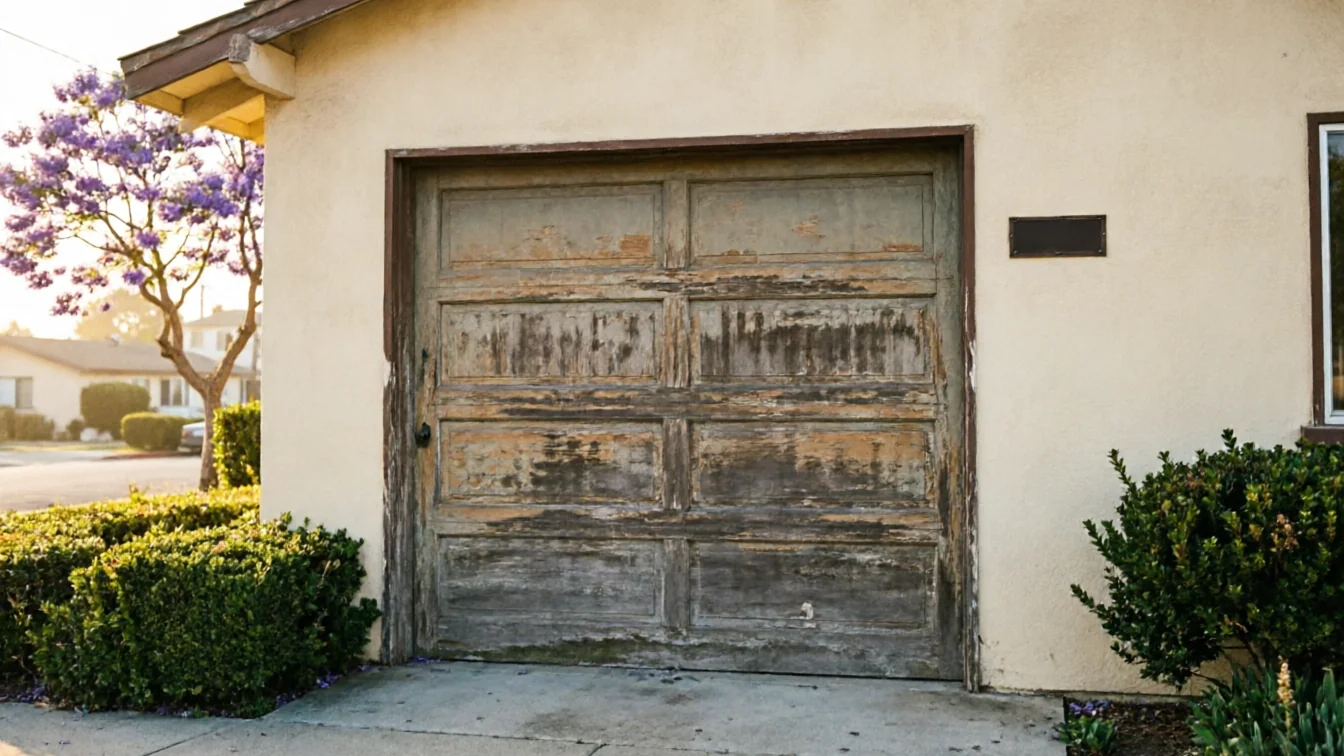
Most El Dorado Hills homes went up between 1959 and 2004, many built in the 1980s and 90s.
Read moreReady when you are
El Dorado Hills Garage Door Pros repairs and installs garage doors, springs and openers in El Dorado Hills, CA and the surrounding area.