Weather Seals and Draughts in El Dorado Hills Garage Doors
Why garage door seals fail in El Dorado Hills homes built 1959-2004, what the moderate-heat climate does to them, and how to check your own door before calling a pro.
Local detail
When It Stops Being a DIY Job
Swapping a bottom seal is a job most owners can do with a trim knife and twenty minutes. Peeling draught strip off the frame and pressing new vinyl into the track is not where things go wrong. Where it goes wrong is when the seal keeps failing in the same spot, or the gap at the bottom isn't even side to side.
Most houses in El Dorado Hills went up between 1959 and 2004, with the heaviest build-out happening in the 1980s and 90s. A door from that era that still won't seal evenly after a fresh strip usually isn't a seal problem at all - it's a slab that's settled, a track pulling away from the jamb, or a panel that's bowed enough that the rubber can't close the distance anymore. On a door that old, chasing the draught with another new seal just delays the real fix.
If you've replaced the bottom seal twice in two years and the gap keeps coming back in the same corner, that's the line. Past that point you're not maintaining a door, you're patching a track or frame problem, and that's worth a second set of eyes before you buy a third roll of vinyl.
The area
What Local Conditions Do
El Dorado Hills sits in a moderate-heat climate band, not the spiking summer-to-winter extremes you'd get in Placerville or Georgetown deeper in the foothills. That matters for seals specifically because the failure mode here isn't a seal that splits overnight in a freeze - it's one that slowly dries, shrinks, and loses its grip over years of steady warm exposure.
On a door installed when the bulk of this area's stock was built, in the 1980s, that original PVC seal has had decades of the same moderate-heat cycle working on it. It doesn't crack dramatically. It just gets a little shorter, a little stiffer, and the gap at the bottom corner widens a sixteenth of an inch at a time until one day you notice daylight under the door you didn't notice last year.
The same goes for the vinyl stop around the frame. It's not storm damage doing the work here - it's sun and sustained heat, season after season, on rubber that was only ever rated for so many years of UV and thermal cycling before it stops flexing back into shape.
What we find
The Problem
Across the 65,852 owner-occupied houses in this service area, the seal failures we see cluster in homes built in that same stretch the area's housing dates to - older doors, original hardware, original weatherstripping nobody's touched since the house was new. The draught itself usually shows up as cold air along the floor in winter or a dust line under the door in summer, and owners often blame the opener or the insulation before they think to check the rubber.
With 129,929 households spread from Cameron Park three miles out to areas well past Georgetown twenty miles east, the housing age pattern repeats across the whole corridor - which is why this is one of the most common calls that isn't actually an emergency. A draught won't strand your car inside or drop a door on anyone. It just costs you a little conditioned air every day until you deal with it.
One limitation worth saying plainly: if the draught is coming from a warped panel rather than a worn seal, new weatherstripping won't fix it. Panel replacement is a different job and a different cost, and no amount of seal swapping closes a gap that's shaped wrong to begin with.
How we work
Checking It Yourself
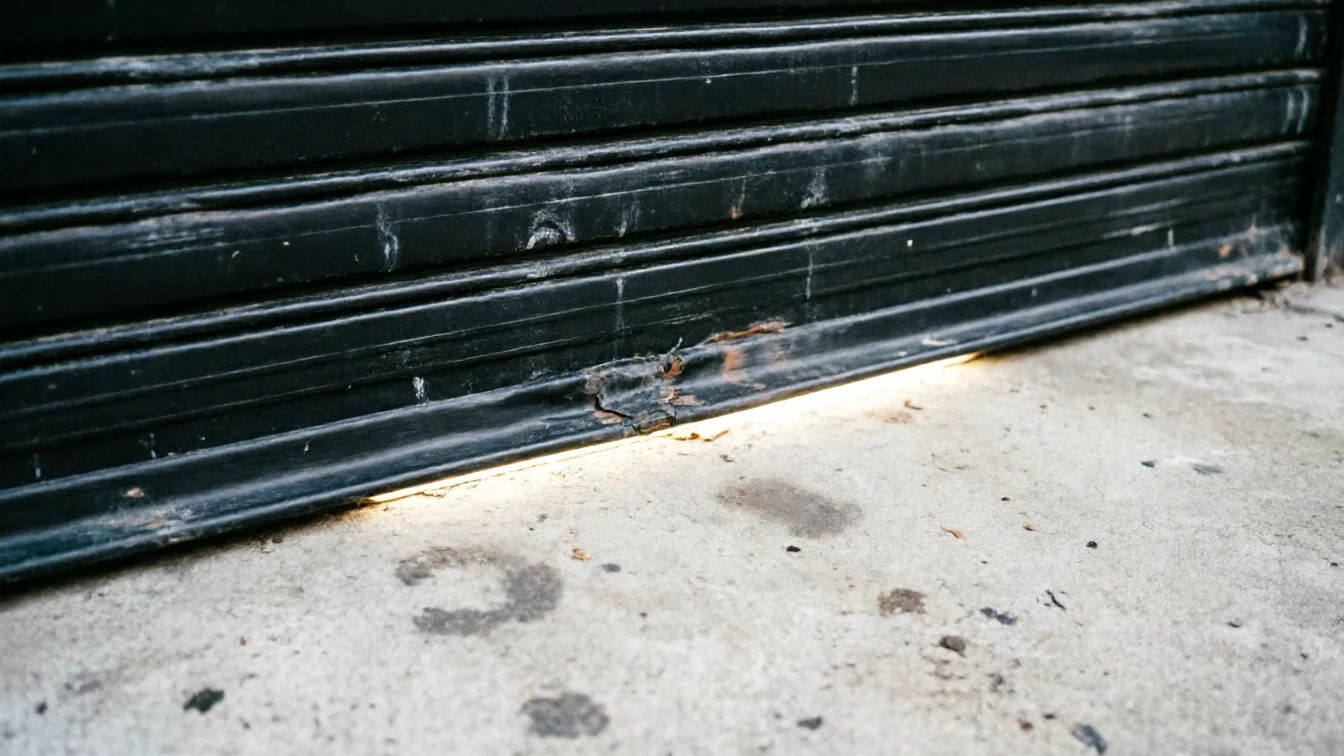
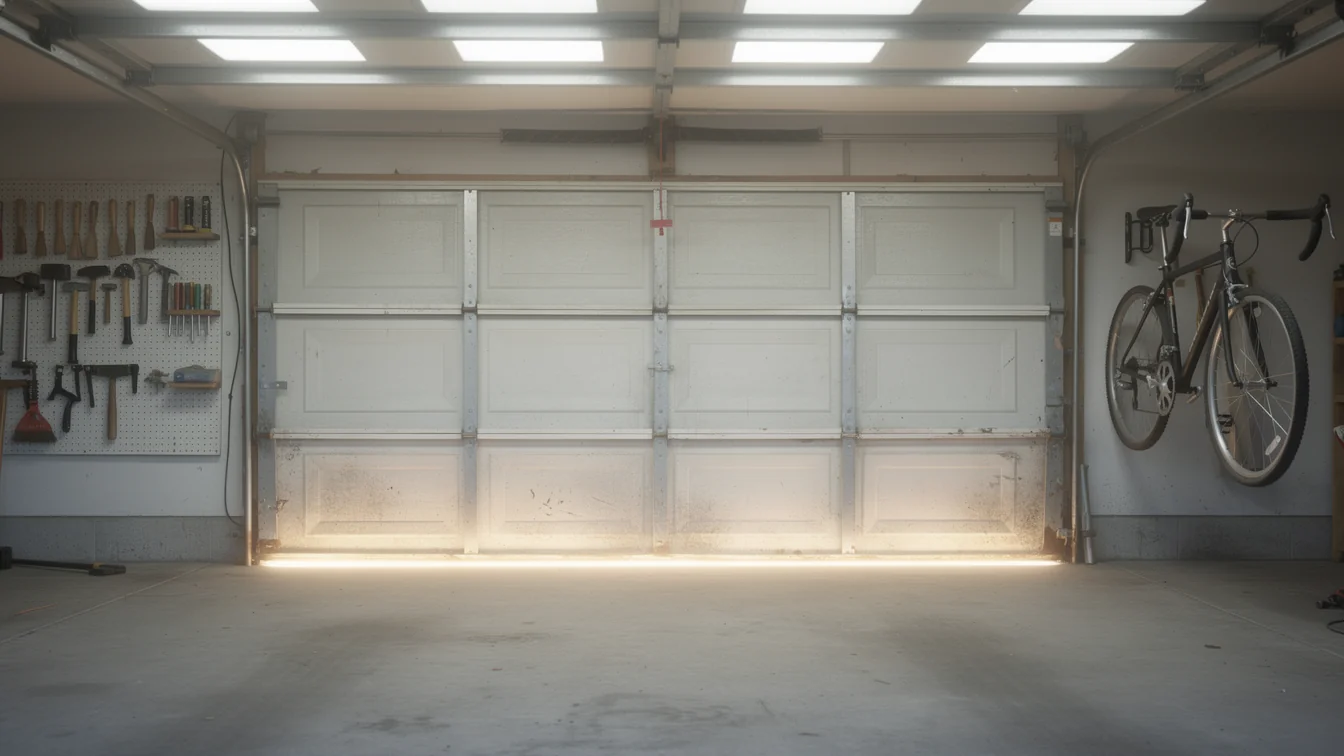
Close the door and walk the perimeter with a flashlight off. If you can see daylight anywhere along the sides or top, or feel air moving across the back of your hand at the bottom corners, you've found your draught. Check whether the gap is even across the whole bottom edge or worse on one side - even wear points to a bad seal, uneven wear points to the door sitting wrong on the slab.
Press a thumb into the seal itself. If it's gone stiff and doesn't spring back, that's the moderate-heat cycling doing what it does over the years - time to replace it, not patch it. If the seal looks fine but the gap is still there, look at the track where it meets the frame; a hairline gap between track and jamb usually means the fix is a fastener, not a strip of vinyl.
This is a five-minute check and it tells you which of the two jobs you're actually looking at before you spend money on the wrong one.
Questions
Common questions
How often should I replace the bottom seal on my garage door?
There's no fixed mileage on a seal - it depends on sun exposure and how many years it's been on the door. If it's stiff, cracked, or not springing back when you press it, it's done its job and it's time for a new one, regardless of how old the door itself is.
Why does my garage door draught even though the seal looks new?
A new seal can't close a gap caused by a warped panel, a settled slab, or a track pulled away from the frame. If the gap is uneven across the bottom or worse on one side, the seal isn't the problem - something structural underneath it is.
Is a garage door draught actually worth fixing?
It won't strand you or drop a door on anyone, so it's not urgent the way a broken spring is. But it's steady conditioned-air loss every day it's left alone, and the fix is usually cheap compared to almost anything else that goes wrong with a door.
Recommendation
You Might Also Like
More garage door guides for El Dorado Hills homeowners.
Why garage door springs in El Dorado Hills homes built between 1959 and 2004 fail on cool mornings, what the moderate climate band actually means, and what to check before you call.