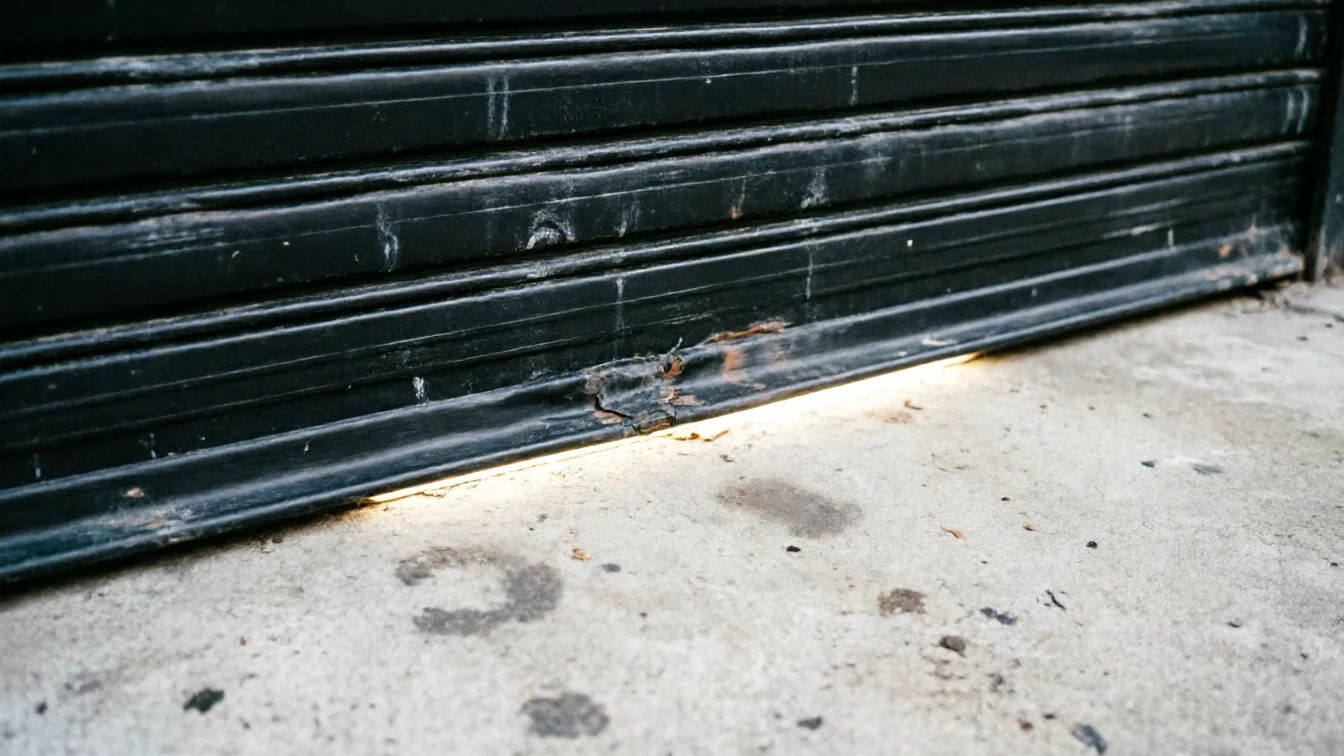
Weather Seals and Draughts in El Dorado Hills Garage Doors
Why garage door seals fail in El Dorado Hills homes built 1959-2004, what the moderate-heat climate does to them, and how to check your own door before calling a pro.
Read moreBlogEl Dorado Hills, CA · 5 min read
Why garage door springs in El Dorado Hills homes built between 1959 and 2004 fail on cool mornings, what the moderate climate band actually means, and what to check before you call.
Local detail
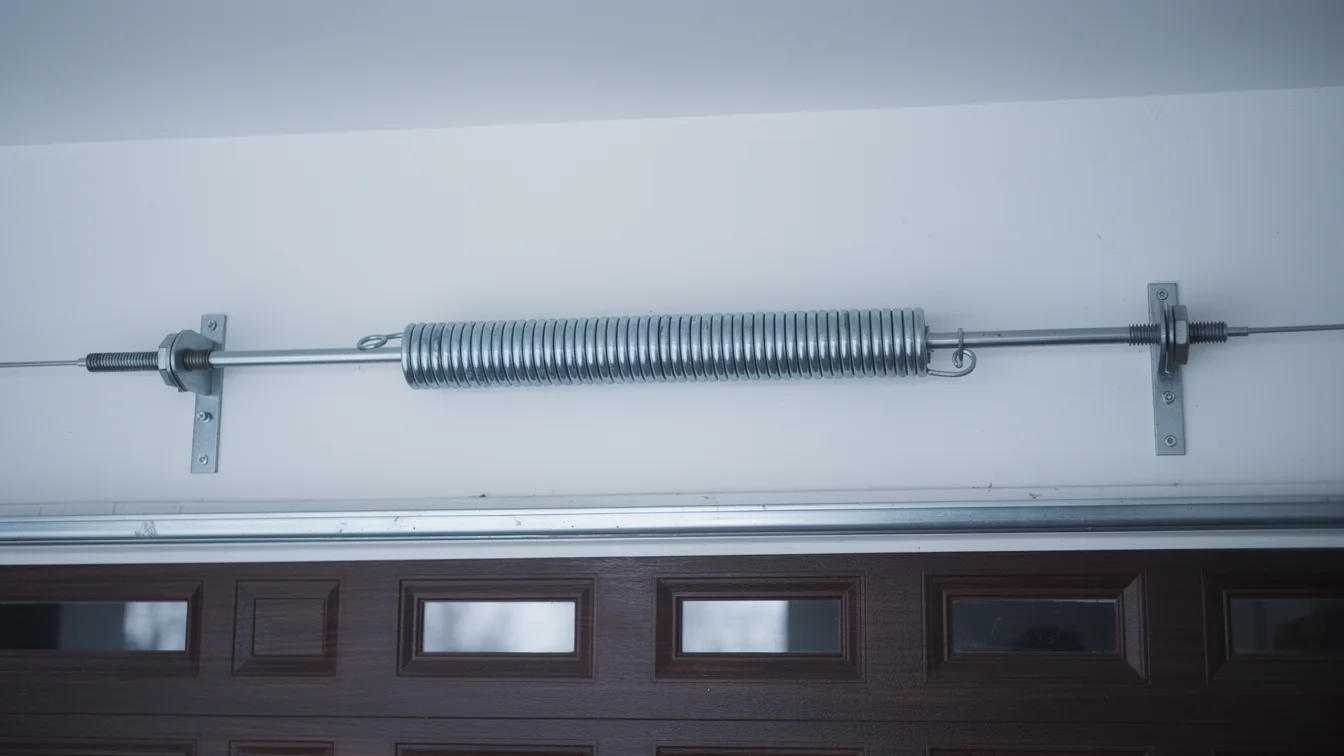
A broken torsion spring is not a weekend project, and the reason has nothing to do with skill. The spring above your door is wound tight enough to lift a couple hundred pounds of panel, and when it lets go, that stored energy has to go somewhere. If you can see a gap in the coil, or the door won't budge past a few inches, stop there. Don't unwind the winding cones, don't cut the cable, don't prop the door open and go looking for the fix yourself.
This matters more here than the age of the spring alone suggests. Housing in El Dorado Hills went up mostly between 1959 and 2004, with the typical home dating to 1981, and most of that stock never had its original springs swapped. A spring rated for a 20-year service life that's now pushing 40 isn't a maybe-it'll-hold situation. It's a question of when, not if.
We'll say plainly what we won't do: we don't recommend re-tensioning a spring that's already showing rust pitting or flat spots just to save a service call. At that point you're paying for a visit either way, sooner or on a Saturday morning when the door won't open at all.
The area
El Dorado Hills sits in a climate band classed as moderate heat, not a harsh-winter zone. That matters for how you think about spring failure here. You're not dealing with the kind of deep freeze that snaps steel outright. You're dealing with something quieter: a swing between warm afternoons and cooler nights that puts repeated small stress on metal that's already fatigued from decades of cycles.
Across the 25 named areas this service covers, the housing stock is mostly 1980s and 90s construction. That era used torsion springs sized to the standards of the time, lighter than what gets installed today, and tempered to handle the number of open-close cycles expected over maybe two decades. Forty-plus years later, those same springs are still carrying doors they were never built to carry this long.
A cool morning doesn't cause the failure on its own. It's the trigger that catches a spring at the point where decades of micro-fatigue meet one more cold start. Owners in older sections notice it most on the first truly cool morning of the season, when a spring that's been sagging quietly all year finally gives.
What we find
Put the two things together: a housing stock mostly built between 1959 and 2004, and a climate where temperature doesn't swing hard but does swing daily, and you get a predictable pattern. Springs here don't usually snap in the middle of a heat wave. They go on the first cool stretch, when steel that's spent all summer slightly more pliable suddenly contracts a little and loses what flex it had left.
This is a maintenance gap problem more than a weather problem. A spring installed when a house was built in 1981 and never replaced has outlived its design life by double or more. Across 65,852 owner-occupied houses in this service area, that's a lot of original hardware still hanging on. The cold morning doesn't create the failure. It exposes a spring that was already due.
The honest version of this: if your spring is original to a house built in the 80s or earlier, waiting for it to fail on its own schedule is a choice, but it's not a free one. A spring that lets go while the door is open can drop a panel. A spring that lets go with the door shut usually just means you're stuck until someone can get out.
How we work
There's a short list of things worth looking at before you call anyone, and none of them involve touching the spring itself.
Look at the coil from a few feet back. A healthy torsion spring sits tight, coil against coil, with no visible gap. A gap anywhere in the coil means it's stretched past where it should be.
Listen for the squeal. A spring that's drying out or losing tension often makes a strained, grinding sound right as the opener starts to lift the door, different from the normal motor hum.
Check how the door sits when it's down. If one side looks higher than the other, or the door isn't sitting flush, that's often a spring on one side carrying more load than the other.
Watch the opener's effort, not just the result. If the chain or belt seems to strain harder than it used to before the door starts moving, that's the opener compensating for a spring that's already lost tension.
None of this tells you exactly how much life is left. What it tells you is whether you're looking at a spring that's still doing its job or one that's already past it, which is the useful thing to know before it fails on its own schedule.
Questions
Steel loses a little flex as it cools, and a spring that's already fatigued from decades of cycles has less margin to absorb that change. El Dorado Hills doesn't get harsh winters, but the daily swing between warm afternoons and cooler mornings is enough to catch a spring right at the point where it was already close to failing.
If your home was built between 1959 and 2004 and you've never had a spring replaced, it's almost certainly original or close to it. Most of this area's housing falls in that window, and a lot of it still carries the springs installed at construction.
Not if it's showing rust, flat spots, or an uneven coil gap. Re-tensioning a spring that's already fatigued just moves the failure point closer, often to a worse time than a scheduled visit.
Recommendation
More garage door guides for El Dorado Hills homeowners.
Why garage door seals fail in El Dorado Hills homes built 1959-2004, what the moderate-heat climate does to them, and how to check your own door before calling a pro.
Read more
What a grinding, popping, or slamming garage door means in El Dorado Hills homes built mostly between 1959 and 2004, and when to stop troubleshooting and call someone.
Read more
Why openers in El Dorado Hills homes built 1959-2004 fail during outages, what the heat does to the circuit board, and when to call instead of guess.
Read moreReady when you are
El Dorado Hills Garage Door Pros repairs and installs garage doors, springs and openers in El Dorado Hills, CA and the surrounding area.